We may earn money or products from the companies mentioned in this post.
Water storage becomes manageable when you turn a vague goal into a household count, a few suitable containers and a review date. Start with a modest supply you can store safely and use reliably, then expand as space and budget allow.
The practical answer
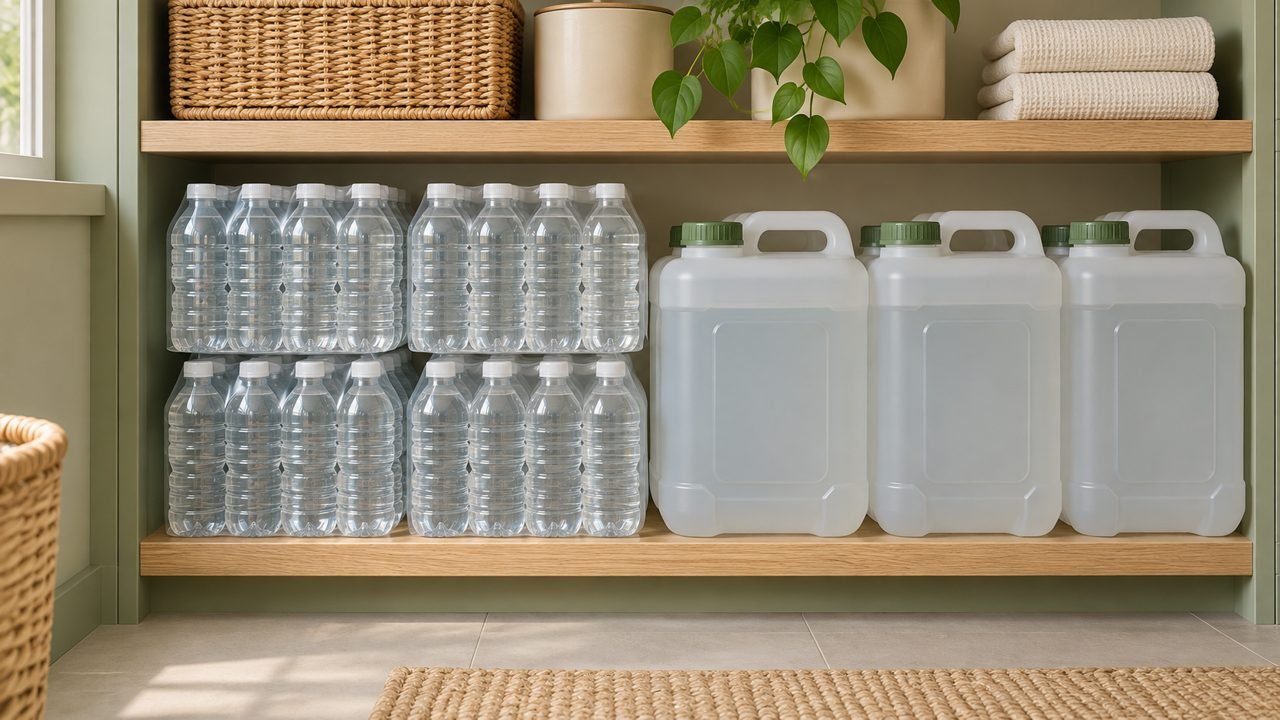
CDC recommends at least one gallon per person per day for three days and suggests working toward two weeks when possible. Plan extra for pets, heat, illness and other household needs. Unopened commercially bottled water is CDC’s most reliable emergency option.
Calculate the starting amount
Multiply the number of people by the number of days and one gallon. Two people need a minimum planning total of six gallons for three days; four people need twelve. These examples are arithmetic, not a personalized hydration prescription. Your household may need more. Include pets separately and ask a veterinarian about their needs.
Use a table to keep the target visible
For a three-day starting supply, one person means three gallons, two means six, three means nine and four means twelve. For a two-week goal, the corresponding totals are fourteen, twenty-eight, forty-two and fifty-six gallons. The larger target may require several secure storage locations. Start with what you can maintain rather than buying containers you cannot move.
Choose suitable containers
For self-filled storage, use containers explicitly suitable for drinking water. A useful design has a tight lid, durable construction and an opening you can pour from. Never reuse a container that held fuel, pesticides or other toxic chemicals. Check manufacturer instructions and the CDC cleaning and sanitizing procedure linked below before filling. A clean-looking container is not necessarily safe for drinking water.
Store for access as well as protection
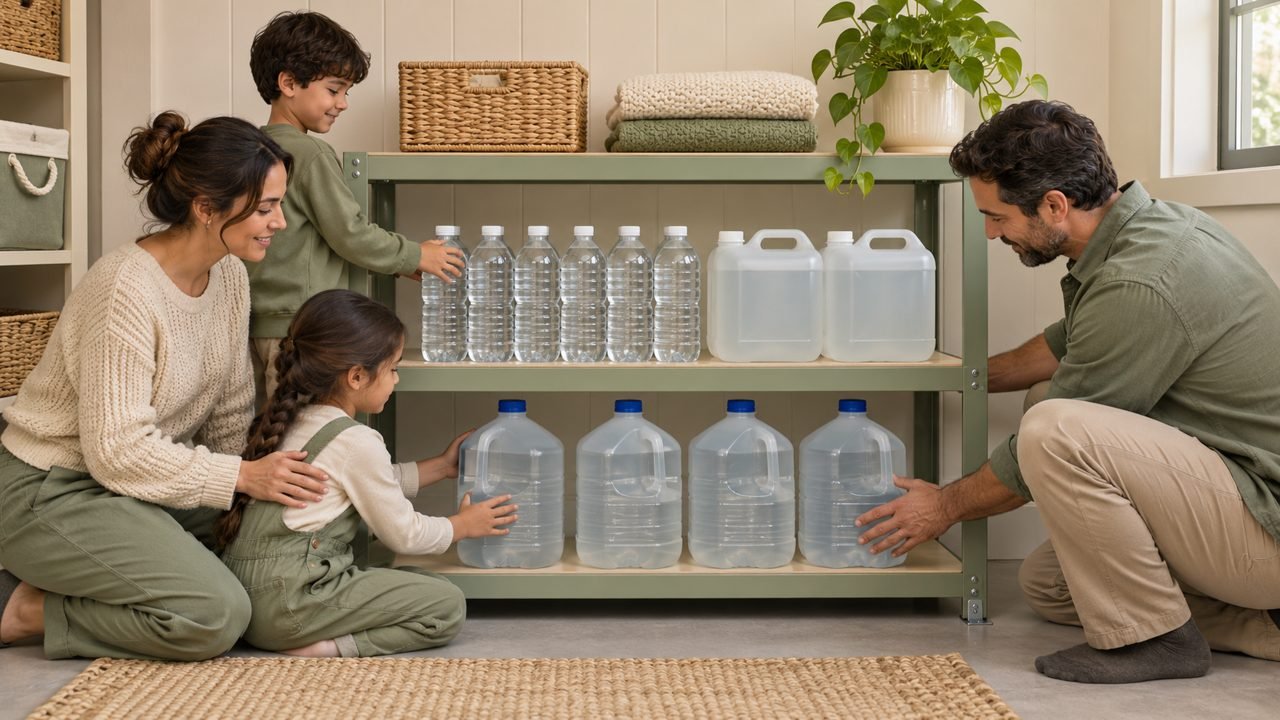
Keep water in a cool location out of sunlight and away from chemicals. CDC gives a storage range of 50–70°F for water filled at home. Avoid precarious stacks and shelves that cannot support the weight. Keep containers where household members can reach and carry them without injury. If flooding is a risk, choose a location that also protects the supply from contaminated water.
Make rotation easy
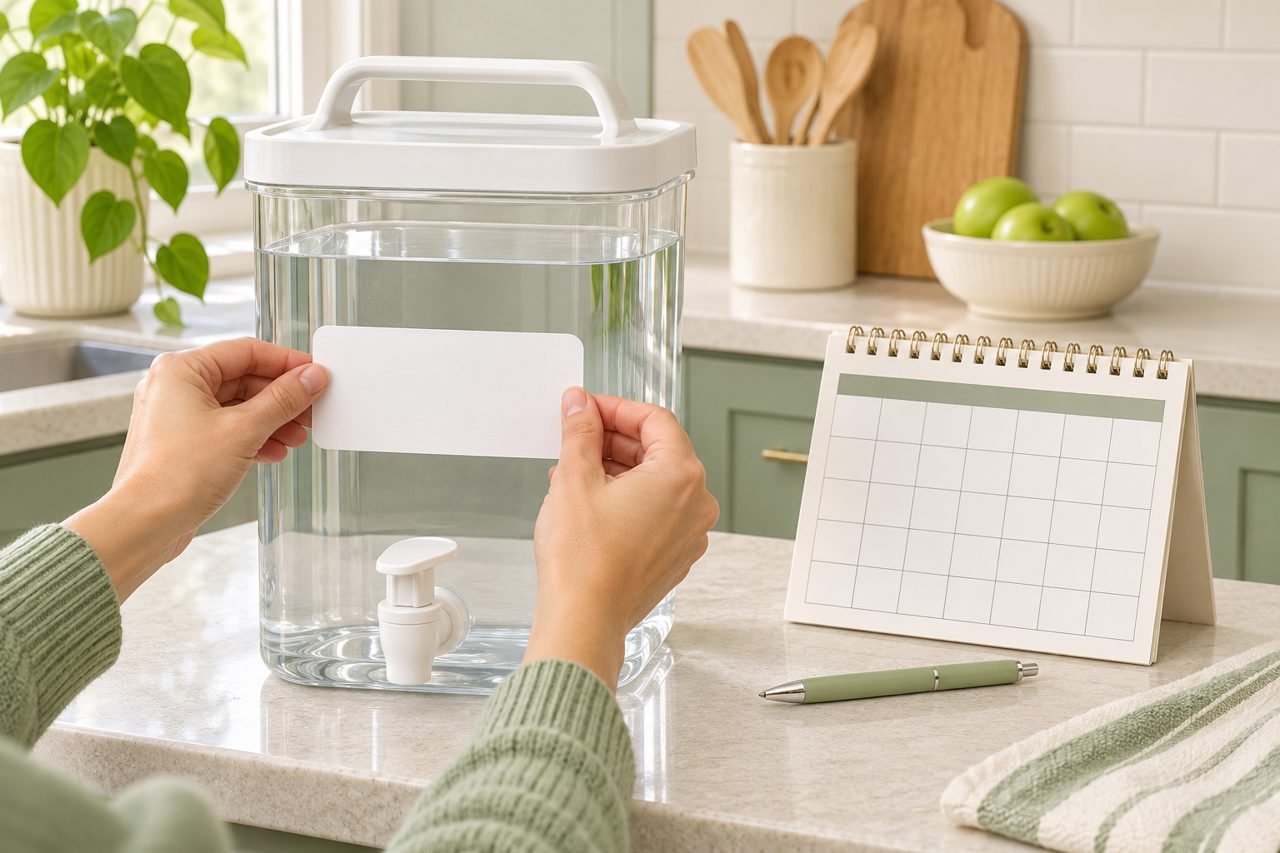
Follow the date on commercially bottled water and replace self-filled water every six months, as CDC advises. Label containers with their contents and fill date. Put the next review on your calendar. During a review, inspect lids and containers, confirm the household count and replace damaged or questionable supplies. Keep an inventory so a partly used container does not silently become your full reserve.
Do not confuse storage with treatment
A filter or a DIY water-producing device does not prove that a supply is safe to drink. Contaminants differ, and equipment has limits. Follow local water notices and authoritative treatment instructions for the actual situation. This guide covers advance storage; it does not provide a universal disinfectant dose or promise that one device can solve every water emergency.
Build the rest of the household plan
Pair the water supply with food that needs little preparation and a power-outage plan. For a small home, divide the task into count, containers, location and rotation. A supply you can find, move and maintain is more useful than an ambitious shopping list.
Quick household calculation
| People | 3-day baseline | 14-day goal |
|---|---|---|
| 1 | 3 gallons | 14 gallons |
| 2 | 6 gallons | 28 gallons |
| 4 | 12 gallons | 56 gallons |
Sources and next step
Reviewed November 27, 2026. CDC emergency water storage · FoodSafety.gov emergency preparation
Follow current local emergency instructions. This guide is general household planning, not individualized medical or technical advice.
Optional paid resource: Smart Water Box
A paid digital DIY guide, not a ready-made water generator or emergency water supply. The seller advertises a $39 offer and a 60-day refund period; parts and construction are separate. We have not built or tested it and could not verify its output or drinking-water safety claims. Do not count a DIY project toward your stored emergency drinking water. Review checkout details and refund conditions before buying.