We may earn money or products from the companies mentioned in this post.
An emergency pantry should feed your household when the stove, refrigerator or normal shopping routine is unavailable. Start with familiar shelf-stable food, a manual can opener and a simple meal plan. Specialized survival food is optional, not the starting requirement.
The practical answer
Plan at least three days of food that meets your household’s needs with little or no cooking, water or refrigeration. Choose ready-to-eat options, account for allergies and special diets, and store portions you can finish safely without relying on leftovers.
Plan meals before counting packages
Write down breakfast, lunch, dinner and snacks for each person. Check actual package portions and nutritional labels rather than assuming one can equals one meal. Consider appetite, medical dietary requirements and food allergies. A shelf full of one food is not a balanced household plan. Ask a clinician or dietitian if a medical diet makes substitutions difficult.
Choose foods you already know how to use
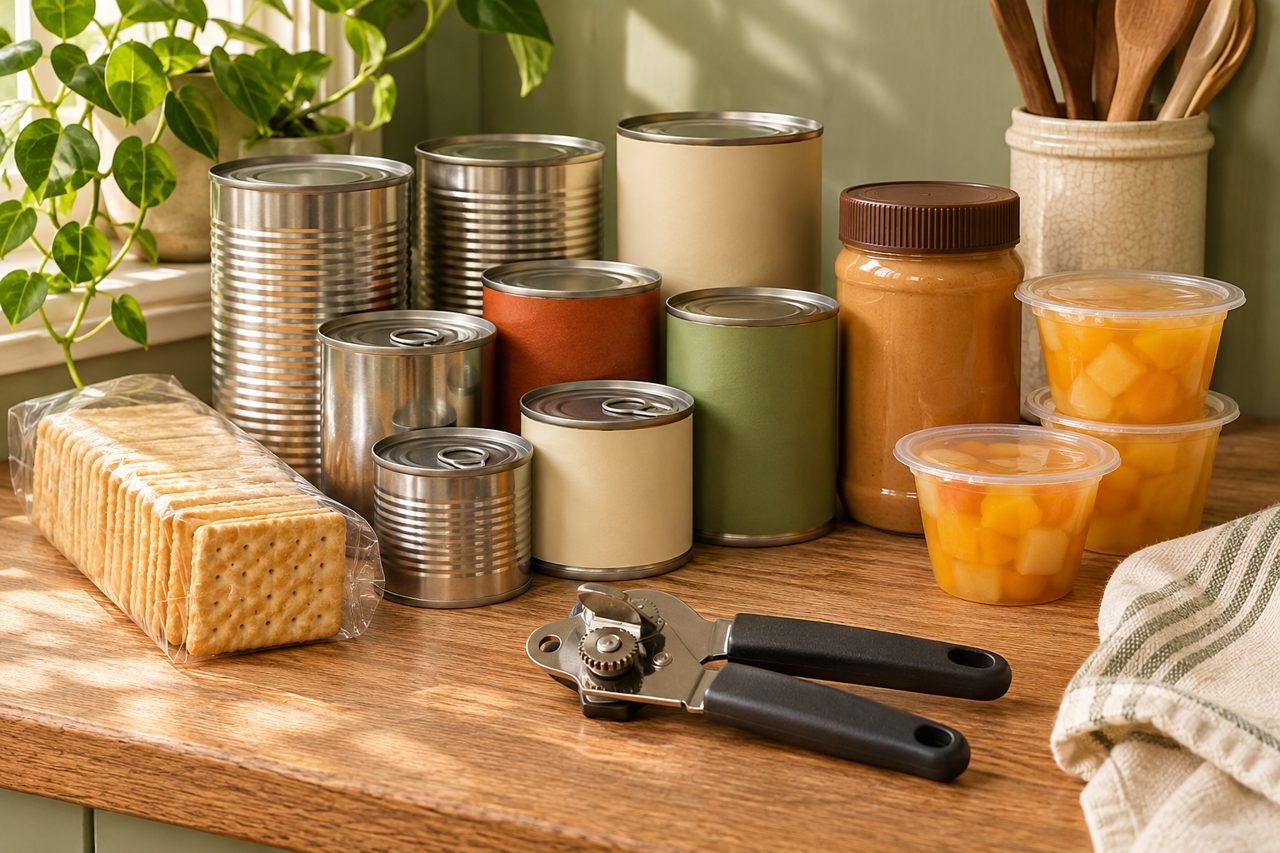
Examples include shelf-stable canned fish or meat, ready-to-eat beans where suitable, fruit cups, crackers, nut or seed butter if tolerated, and shelf-stable drinks. Check labels: some products that look similar require refrigeration or cooking. Choose options your household will eat, including children and older adults. Keep infant and pet needs in their own plan.
Build a sample day, then adjust it
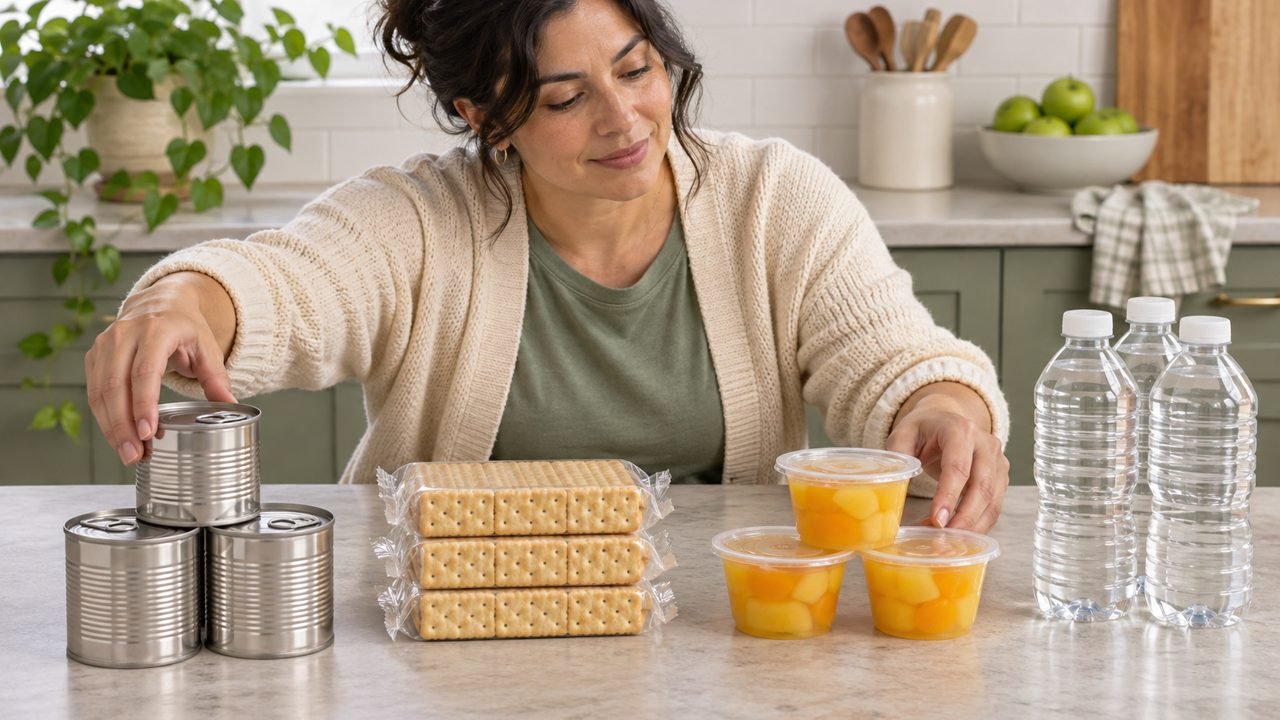
An illustrative day might pair cereal with an appropriate shelf-stable drink for breakfast, crackers and a tolerated spread at lunch, and ready-to-eat canned protein or beans with vegetables at dinner. Add fruit and snacks to suit individual needs. This is a planning example, not a complete nutritional prescription. Verify every item can be eaten as planned without heat or extra water.
Remember the tools and cleanup
Store a working manual can opener, utensils, clean serving items, bags and appropriate hygiene supplies alongside the food. Test the opener on a normal meal before depending on it. Choose smaller packs when you cannot safely refrigerate leftovers. Include safe drinking water; a no-cook pantry still needs water for drinking and hygiene.
Store and rotate deliberately
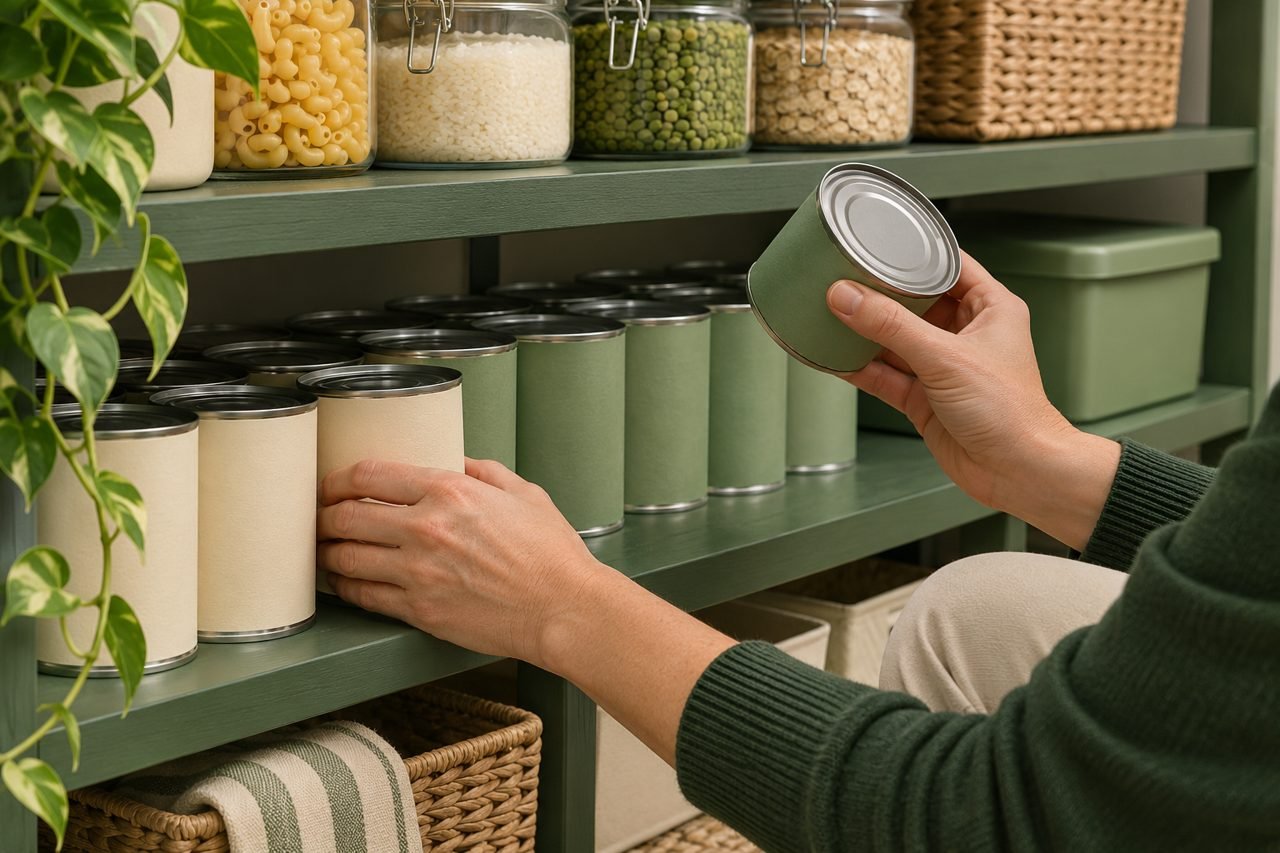
Federal guidance recommends a cool, dry, dark location, ideally 40–70°F, away from heat and petroleum products. Protect food from pests and floodwater. Use and replace stock in line with label dates and storage instructions. Keep older suitable items toward the front, inspect packaging, and record what has been used so your emergency supply does not gradually disappear.
Keep unsafe refrigerated food out of the meal plan
A power outage does not make everything in the fridge usable for three days. Consult the official outage chart for temperature and time limits, keep appliance doors closed and never taste food to judge safety. Do not use a grill or camping stove indoors to rescue a meal. If the food supply becomes contaminated or unsafe, follow public-health guidance rather than improvising.
Buy to fill a gap, not to create a stockpile you cannot use
Compare any emergency-food kit by edible portions, preparation water, allergens, nutrition, storage conditions and current terms. A serving count alone does not show how many days your family can eat. Build the basic pantry first; evaluate specialty products only where they solve a real need.
Finish with a household check
Try one planned no-cook meal on an ordinary day. Note missing utensils or unsuitable portions, then revise the list. Connect this pantry to your water storage plan and outage checklist. The goal is a small, usable reserve you can maintain.
Sources and next step
Reviewed November 27, 2026. FoodSafety.gov emergency food preparation · USDA emergency food suggestions · FoodSafety.gov outage chart
Follow current local emergency instructions. This guide is general household planning, not individualized medical or technical advice.